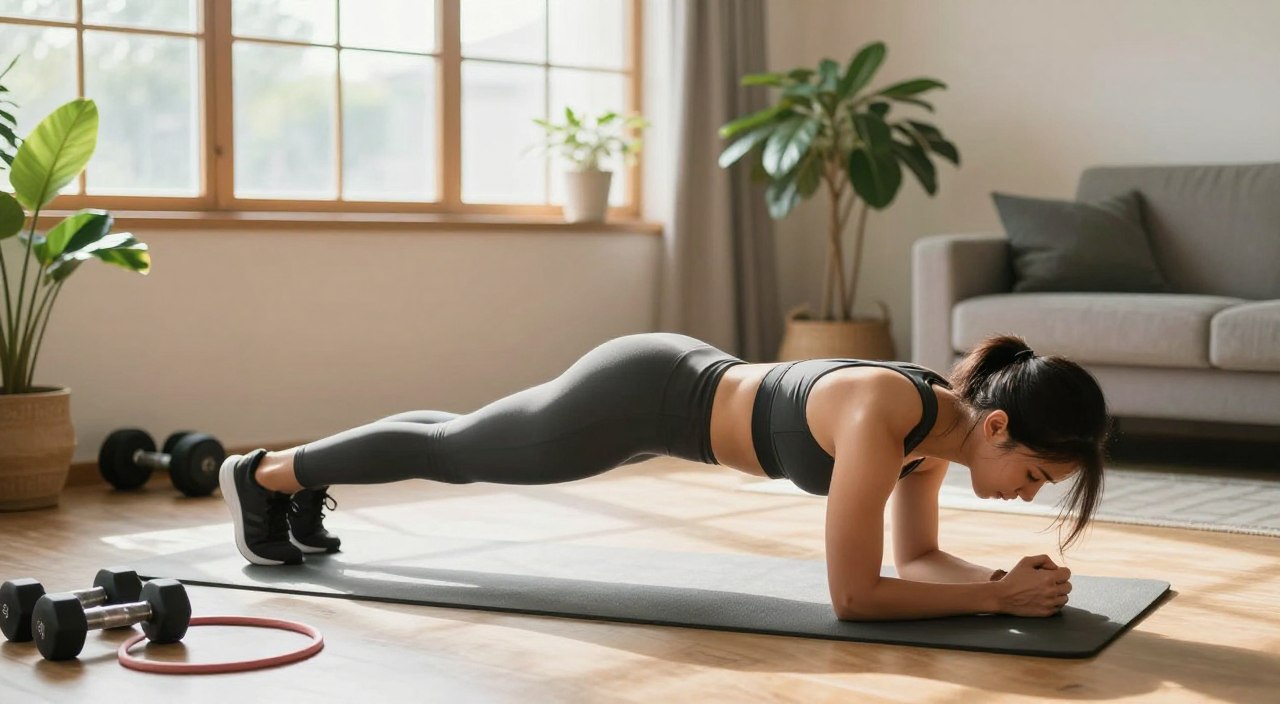
Looking for a 15-Minute Home Workout that actually works? This friendly 2026 guide offers simple, effective exercises to fit your busy lifestyle.
Finding time for fitness often feels like a losing battle in our busy lives. You likely juggle work, family, and personal errands, leaving little room for long gym sessions. However, you do not need hours of training to see real physical changes.
A high-intensity 15-Minute Home Workout can deliver incredible results when you focus on proper form and effort. This guide provides the tools you need to reclaim your schedule while building strength and endurance.

Consistency remains the secret ingredient to long-term health success. By committing to short, daily movement, you create habits that stick. This 2026 approach proves that your dedication matters far more than the duration of your exercise routine.
Key Takeaways
- Short, intense sessions provide significant physiological benefits.
- Prioritize consistent daily movement over long, infrequent gym visits.
- Proper form is essential for safety and effectiveness.
- This 15-Minute Home Workout fits perfectly into a busy lifestyle.
- Focusing on intensity helps you achieve tangible fitness goals faster.
Why Short Workouts Are the Future of Fitness
The landscape of personal health is shifting toward smarter, faster, and more accessible methods. Many people now realize that a short home workout can deliver impressive results without requiring a massive time commitment. This evolution in exercise philosophy prioritizes intensity and consistency over long, drawn-out sessions at a crowded gym.
The Shift Toward Time-Efficient Home Fitness
Modern life demands flexibility, which is why time-efficient home fitness has become a cornerstone of sustainable wellness. By focusing on high-quality movements, you can achieve your goals in a fraction of the time. A quick exercise routine allows you to integrate physical activity into your day without disrupting your workflow or family life.
- Increased metabolic rate through high-intensity bursts.
- Greater adherence due to lower time barriers.
- Improved mental clarity and focus throughout the day.
Overcoming the Barrier of Busy Schedules
The most common excuse for skipping exercise is a lack of time, but a simple workout for busy schedules effectively removes this obstacle. Whether you are a busy professional or a parent, you can find fifteen minutes to prioritize your health. Adopting a time-saving home workout ensures that your fitness journey remains a priority, even during your most hectic weeks.
Embracing fast home fitness is not about cutting corners; it is about working smarter. By utilizing a time-saving exercise routine, you maintain your strength and endurance while keeping your stress levels low. This approach to a home workout for busy schedules is the key to long-term success.
| Feature | Traditional Gym | Short Home Workout |
|---|---|---|
| Time Required | 60-90 Minutes | 15 Minutes |
| Equipment | Extensive | Minimal |
| Flexibility | Low | High |
The Science Behind the 15-Minute Home Workout
The secret to effective fitness lies in the physiological response your body has to intense movement. You do not need hours in a gym to see real changes in your body composition. A well-structured 15-Minute Home Workout can trigger significant metabolic shifts that support your health goals.
This time-saving home workout approach relies on specific biological mechanisms. By pushing your limits in short bursts, you force your body to adapt and become more efficient at burning energy.
Understanding Metabolic Demand and EPOC
When you engage in a short home workout, your body experiences a phenomenon known as Excess Post-exercise Oxygen Consumption, or EPOC. This process occurs because your body requires extra oxygen to return to its resting state after intense physical stress.
During this recovery phase, your metabolism remains elevated for hours. This means you continue to burn calories long after you have finished your session. It is a highly efficient way to maximize your results without spending your entire day exercising.
Why Intensity Outweighs Duration
Many people mistakenly believe that longer sessions always yield better results. However, a high-intensity home workout often outperforms a long, low-effort routine because it forces your muscles to work at a higher capacity.
When you prioritize intensity, you trigger a stronger hormonal response that aids in fat loss and muscle retention. This quick home workout strategy ensures that every second you spend moving counts toward your progress. By focusing on quality over quantity, you achieve better outcomes in a fraction of the time.
Essential Preparation for Your At-Home Fitness Regimen
A successful home fitness routine begins long before you break a sweat. Preparing your environment is a critical step in ensuring your at-home fitness regimen remains consistent and enjoyable. When your space is ready, you remove the mental friction that often prevents you from starting.

Creating a Dedicated Space for Movement
You do not need a dedicated gym room to stay active. Even in small apartments, you can carve out a specific corner that signals to your brain it is time to move. Clear away clutter and ensure you have enough room to extend your arms and legs fully without hitting furniture.
Try to keep this area visually clean to maintain focus during your quick home exercise routine. If you are short on space, consider using a foldable yoga mat that you can tuck away under a bed or behind a door when you finish. Consistency thrives when your equipment is easy to access and your space is inviting.
“By failing to prepare, you are preparing to fail.”
Minimalist Gear That Enhances Results
Many people believe they need expensive machines to see progress, but that is a common misconception. A no equipment home workout can be just as effective as a session at a commercial gym if you focus on intensity. You can achieve time-efficient home fitness by using simple, low-cost tools that add variety to your movements.
- Resistance bands: Lightweight and perfect for adding tension to bodyweight moves.
- Adjustable dumbbells: A space-saving solution for building strength.
- Jump rope: An excellent tool for elevating your heart rate in seconds.
These items take up very little room and provide enough challenge to keep your muscles engaged. Remember, the goal is to make your environment work for you, not against you.
Warm-Up Protocols to Prevent Injury
A proper warm-up is the secret weapon for anyone looking to master a fast home fitness routine. When you only have a few minutes to train, it is tempting to dive straight into the heavy lifting. However, taking a moment to prime your body is essential for long-term success.
“Preparation is the foundation upon which all great physical achievements are built.”
By dedicating just two minutes to movement, you signal to your nervous system that it is time to perform. This transition helps you avoid the common pitfalls that lead to burnout or muscle strain.

Dynamic Stretching Techniques
Dynamic stretching is far superior to static holding when you need a fast home exercise session. These movements keep your body in motion, which increases your core temperature and improves blood flow to your working muscles.
Try incorporating leg swings, arm circles, and torso twists into your pre-workout flow. These simple actions wake up your central nervous system and ensure your muscles are pliable and ready for action.
Preparing Your Joints for High-Intensity Loads
Your joints act as the hinges for every movement you perform. When you engage in a fast home exercise routine, these hinges face significant pressure that requires adequate lubrication and stability.
Focusing on controlled, full-range movements helps prepare your ligaments for the stress of high-intensity training. By prioritizing this phase, you significantly reduce the risk of injury and ensure that every minute of your workout is spent moving with confidence and safety.
Core Movements for a Full-Body Effect
Mastering a few key movement patterns is the secret to creating a highly effective at-home workout. By focusing on exercises that engage multiple muscle groups at once, you ensure that every second of your training session provides maximum value. This approach allows you to build functional strength while keeping your heart rate elevated throughout the entire routine.
Compound Exercises That Maximize Calorie Burn
Compound movements are the foundation of any successful no equipment home workout. Unlike isolation exercises that target a single muscle, these movements force your body to coordinate across several joints and muscle groups. This increased demand requires more energy, which leads to a higher calorie burn in a shorter amount of time.
When you perform these exercises, your metabolic rate stays elevated long after you finish your session. This is the primary reason why short, intense bursts of activity are so powerful for body composition. You are essentially teaching your body to become a more efficient machine by challenging it with complex, multi-joint tasks.

Integrating Push, Pull, and Squat Patterns
To build a balanced physique, your routine should include a mix of push, pull, and squat patterns. These three categories cover the most essential human movements and form the backbone of a high-quality no equipment workout. By rotating through these patterns, you ensure that no muscle group is left behind during your training.
Pushing movements, such as standard push-ups, target your chest, shoulders, and triceps. Pulling movements, like bodyweight rows or reverse lunges, help balance your posture and strengthen your back. Finally, squat patterns are the ultimate quick home exercises for building lower body power and core stability.
You can easily combine these patterns into a seamless circuit to keep your intensity high. By moving from a squat to a push and then to a pull, you allow one muscle group to recover while another works. This strategy is the most reliable way to maintain a high level of effort without needing any external weights or machines.
Structuring Your High-Intensity Home Workout
A well-planned high-intensity home workout is the secret to achieving fitness goals on a tight schedule. When you have limited time, every second counts toward your progress. By organizing your movements with purpose, you can turn any space into a professional training zone.

Designing Your Circuit for Maximum Efficiency
To build an efficient workout plan, you should group movements that target different muscle groups in succession. This approach allows one area of your body to recover while another works hard. By rotating through these quick home exercises, you keep your heart rate elevated without needing long breaks.
Focus on a flow that moves from standing exercises to floor work to minimize transition time. This seamless movement is the hallmark of an efficient workout at home. When your circuit is logical, you spend less time thinking and more time moving.
Managing Rest Intervals for Optimal Performance
Rest is not just downtime; it is a strategic tool for your quick home workout. If you rest too long, your heart rate drops and you lose the metabolic benefits of the session. Conversely, resting too little can compromise your form and safety.
Aim for a work-to-rest ratio that challenges your cardiovascular system while allowing enough recovery to maintain intensity. This balance is essential for any efficient workout plan. Use the table below to determine the best timing for your fitness level.
| Intensity Level | Work Duration | Rest Period | Goal |
|---|---|---|---|
| Beginner | 30 Seconds | 30 Seconds | Build Endurance |
| Intermediate | 45 Seconds | 15 Seconds | Increase Capacity |
| Advanced | 50 Seconds | 10 Seconds | Peak Performance |
By mastering these intervals, you ensure that your quick home exercises remain effective throughout the entire session. Consistency in your timing leads to better results and a more efficient workout at home. Stay disciplined with your clock to maximize every single minute of your training.
Modifications for Every Fitness Level
Whether you are just starting out or looking to push your limits, modifications are the secret to long-term success. Fitness is a personal journey, and your quick home exercise routine should adapt to your unique needs. By adjusting intensity and complexity, you ensure that your training remains both safe and effective.
Scaling Exercises for Beginners
If you are searching for a home workout for beginners, the focus should be on building a solid foundation. You can easily simplify complex movements to match your current strength levels. For instance, if a standard push-up feels too difficult, perform it against a wall or on your knees to reduce the load.
A no equipment workout does not have to be intimidating. You can shorten your range of motion during squats or lunges to protect your joints while you build confidence. Remember that consistency matters more than raw intensity when you are first starting your fitness path.
Advancing Movements for Experienced Athletes
Once you have mastered the basics, you might want to turn your session into a more challenging easy home fitness routine. Experienced athletes can increase the metabolic demand by adding explosive elements to standard movements. You might incorporate jump squats or increase your tempo to keep your heart rate elevated throughout the entire circuit.
Another way to advance is by reducing your rest intervals between sets. This forces your body to recover faster and improves your overall endurance. By constantly tweaking these variables, you keep your training fresh and avoid the dreaded plateau.
| Movement Type | Beginner Modification | Advanced Variation |
|---|---|---|
| Push-ups | Wall or Knee Push-ups | Decline or Plyometric Push-ups |
| Squats | Chair-assisted Squats | Jump Squats |
| Lunges | Static Split Squats | Walking Lunges with Tempo |
| Plank | Knee Plank | Plank with Leg Lifts |
Tracking Progress Without Complex Equipment
Measuring your progress is the secret weapon for any successful at-home fitness regimen. You do not need expensive wearable technology or high-tech sensors to understand how your body is changing. Simple, low-cost methods often provide the most honest feedback about your physical development.
Using Journaling to Monitor Strength Gains
A basic notebook or a digital app can serve as a powerful tool for any home workout for beginners. By writing down your sets, repetitions, and the weight used, you create a clear map of your improvement. This data-driven approach helps you identify exactly when to increase intensity or add more volume to your sessions.
Consider using a simple table to organize your data. This allows you to visualize your growth over several weeks at a glance.
| Exercise | Week 1 | Week 4 | Improvement |
|---|---|---|---|
| Push-ups | 10 reps | 15 reps | +50% |
| Bodyweight Squats | 20 reps | 30 reps | +50% |
| Plank Hold | 30 sec | 45 sec | +15 sec |
The Role of Consistency in Long-Term Success
Maintaining an easy home fitness routine is far more effective than sporadic, high-intensity bursts. When you track your daily wins, you build the mental momentum needed to stay committed. Consistency turns a simple home fitness routine into a sustainable lifestyle change that yields real results.
Focusing on small, daily improvements ensures that you avoid burnout while steadily reaching your goals. Remember these key benefits of consistent tracking:
- Accountability: Writing down your workouts keeps you honest about your effort.
- Motivation: Seeing past performance helps you push harder during current sessions.
- Clarity: You can easily spot which exercises need more focus or adjustment.
Success is not built in a day, but it is built through the accumulation of small, daily victories. By keeping a record of your journey, you transform your living room into a space of constant growth and achievement.
Nutrition and Recovery for Busy Schedules
Nutrition and recovery act as the foundation for any sustainable home workout for busy schedules. While your training sessions provide the stimulus for change, your daily habits determine how well your body adapts to that stress. Treating these elements as non-negotiable parts of your day ensures that your efforts lead to lasting results.
Fueling Your Body for Short Bursts of Effort
When you follow an efficient workout plan, your body requires high-quality fuel to perform at its peak. Focus on consuming complex carbohydrates and lean proteins about an hour before your session to provide steady energy. This simple strategy prevents the mid-workout fatigue that often plagues those with limited time.
Hydration remains just as critical as your food choices during a time-saving exercise routine. Drinking enough water throughout the day keeps your muscles functioning properly and aids in metabolic efficiency. By keeping your nutrition simple and consistent, you remove the guesswork from your daily health goals.
Prioritizing Sleep and Active Recovery
Recovery is the period when your muscles actually repair and grow stronger after an efficient workout at home. Prioritizing seven to nine hours of quality sleep is the most effective way to manage the physical demands of your training. If your schedule feels too packed, try to view sleep as a vital component of your performance rather than a luxury.
Active recovery techniques, such as light walking or gentle stretching, can also help reduce soreness on your off days. These low-impact movements keep your blood flowing and help you stay consistent with your fitness habits. Consistency in these small, daily choices will ultimately define your long-term success and physical well-being.
Common Mistakes to Avoid in Short Routines
Avoiding common pitfalls is the secret to maintaining a sustainable and effective at-home workout. Even when you are pressed for time, your approach to movement matters significantly. A quick exercise routine should prioritize quality to ensure you stay injury-free while reaching your goals.
Ignoring Form for the Sake of Speed
The most frequent error in a fast home fitness routine is sacrificing proper technique to complete more repetitions. When you rush through movements, your muscles lose the necessary tension required for growth. This often leads to poor posture and unnecessary strain on your joints.
To keep your training safe, focus on these key principles:
- Always prioritize controlled movement over raw speed.
- Stop if you feel your form breaking down during a set.
- Use a mirror or record yourself to check your alignment.
The Danger of Overtraining Without Proper Rest
Many people believe that more is always better, but this mindset can lead to burnout. Engaging in fast home exercise every single day without adequate recovery prevents your body from repairing tissues. This stall in progress often leaves you feeling exhausted rather than energized.
Your body needs time to adapt to the stress of high-intensity training. If you find yourself feeling constantly sore or unmotivated, it is time to adjust your schedule. A balanced fast home exercise routine includes rest days to ensure you remain consistent and healthy for the long term.
Conclusion
Transforming your physical health does not require hours of spare time. You possess the ability to reach your peak performance by focusing on high-quality movement within your own living room.
Modern fitness relies on smart choices rather than endless hours at a commercial gym. By prioritizing intensity and proper recovery, you build a sustainable habit that fits your busy lifestyle. Your body responds best to consistent effort applied with intention.
Grab your gear and commit to your first fifteen-minute session today. Small actions lead to significant changes in your energy levels and overall strength. You deserve to feel your best every single day. Start this process now and watch how your dedication creates lasting results for your future self.